Blog
For the Poop-Curious
For the Poop-Curious

Have you ever wondered how people collect stool samples for microbiome research? No? Consider yourself lucky and normal 😉.
Have you ever wondered how people collect stool samples for microbiome research? No? Consider yourself lucky and normal 😉.
A microbiome researcher’s adventures in stool collection
By Heidi A. Arjes, PhD
Despite having spent much of my career around microbiome researchers, I hadn’t thought deeply about stool collection until joining Outpost Bio. We’re building a platform that combines high-throughput experiments with machine learning to understand how different human microbiomes respond to drugs and other interventions. To create these microbiomes, we need stool samples—and preferably a collection process that doesn’t scare away our donors.
I participated in a stool microbiome study as a postdoc in KC Huang’s lab. The trainees involved showed up early one morning, drank their coffee, and did some science business. I’m not a coffee drinker, but I still managed to participate.
We used so-called “poop hats”: devices that sit underneath the toilet seat and hold a Cool Whip-sized tub. The collection itself was easy. The yucky part was gloving up and scooping a pea-sized portion into a tube and capping it while trying to remain as sterile as possible. After reserving our pea-sized portion, we bagged the remainder inside the poop hat and put them in the biohazard bin.
💡Pro tip: Schedule this type of experiment for the day the biohazard waste is collected, *not* several days before the waste is picked up.
I had filed that experience away as simply how stool collection works. And researchers often use this approach, especially when the amount of material matters—for example, when screened healthy donors provide stool for fecal microbiota transplantation preparations.
However, while looking into stool collection protocols, I learned about a simpler method: collecting directly into a specimen cup. The donor holds the cup in place (with a gloved hand), collects the sample by pooping directly into the cup, tightly screws on the lid, continues with their bathroom routine, and then returns the cup to the researcher.
I was intrigued. On every dog walk that week, I watched my dog poop and thought: If it works roughly the same way for humans, collecting some of it in a cup really shouldn’t be that difficult. I recruited an enthusiastic coworker who tested this method at home and had no problem. I tested it too and was surprised by how easy it was! It’s now our standard collection method. Meanwhile, I have an annoyingly large box of poop hats in reserve.
I haven’t exhaustively researched every stool-collection method, and I’m sure there are others that work well. I found some commercial flushable at-home collection devices and considered testing those as an alternative. But in startup life, once you find something that works and makes the process more efficient, you move quickly to the next problem, so I have no data on those. However, to make this post as informative as possible, if you know of other stool-collection protocols we should consider or feature here, feel free to reach out, and I’ll update this post with your tips/suggestions!
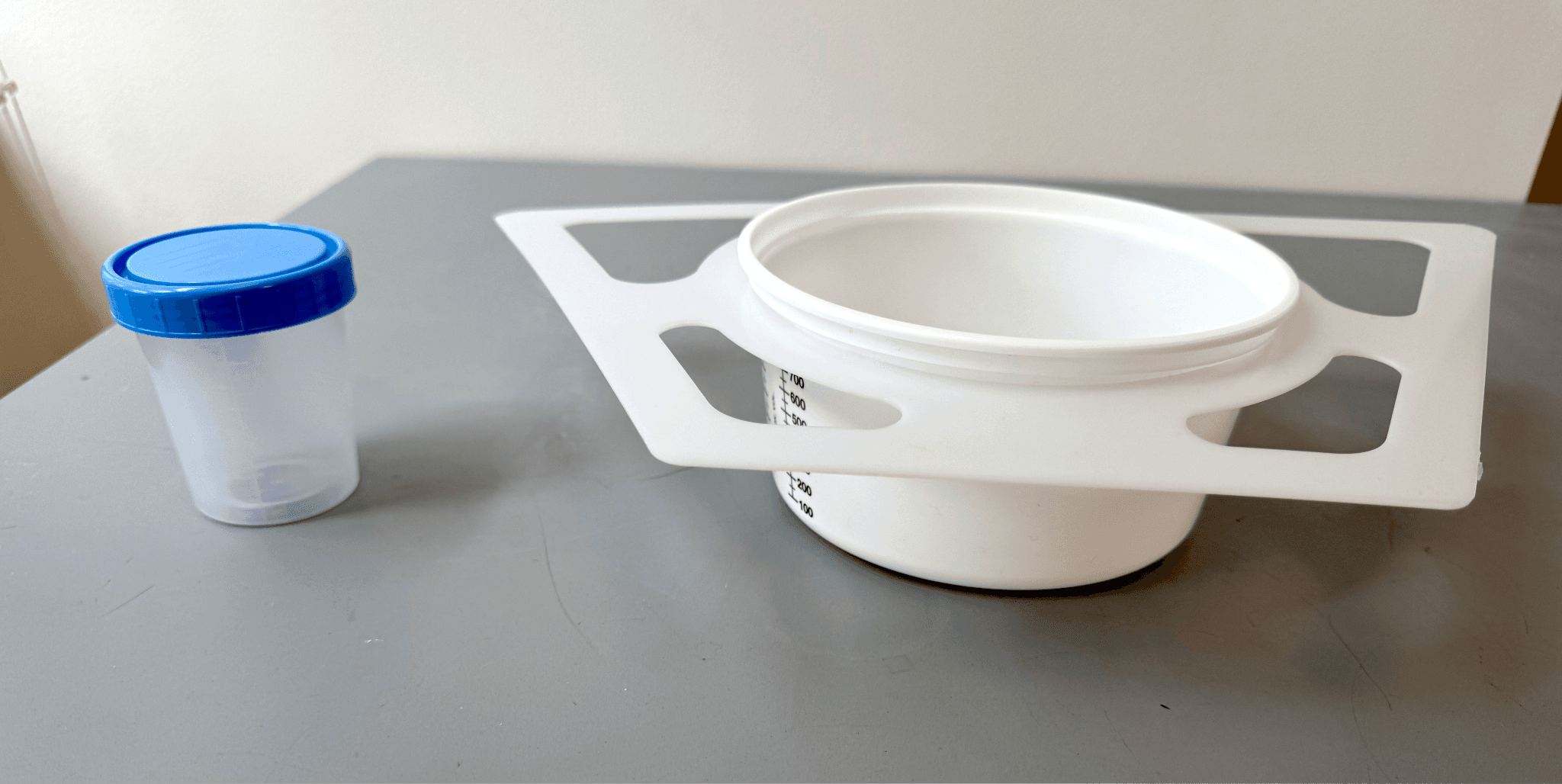
Picture caption: Two stool collection options described in this article. A sample cup that you can deposit your sample directly into (left) as compared to a “Poop hat” that would sit on the toilet bowl under the seat and collect a larger sample (right).
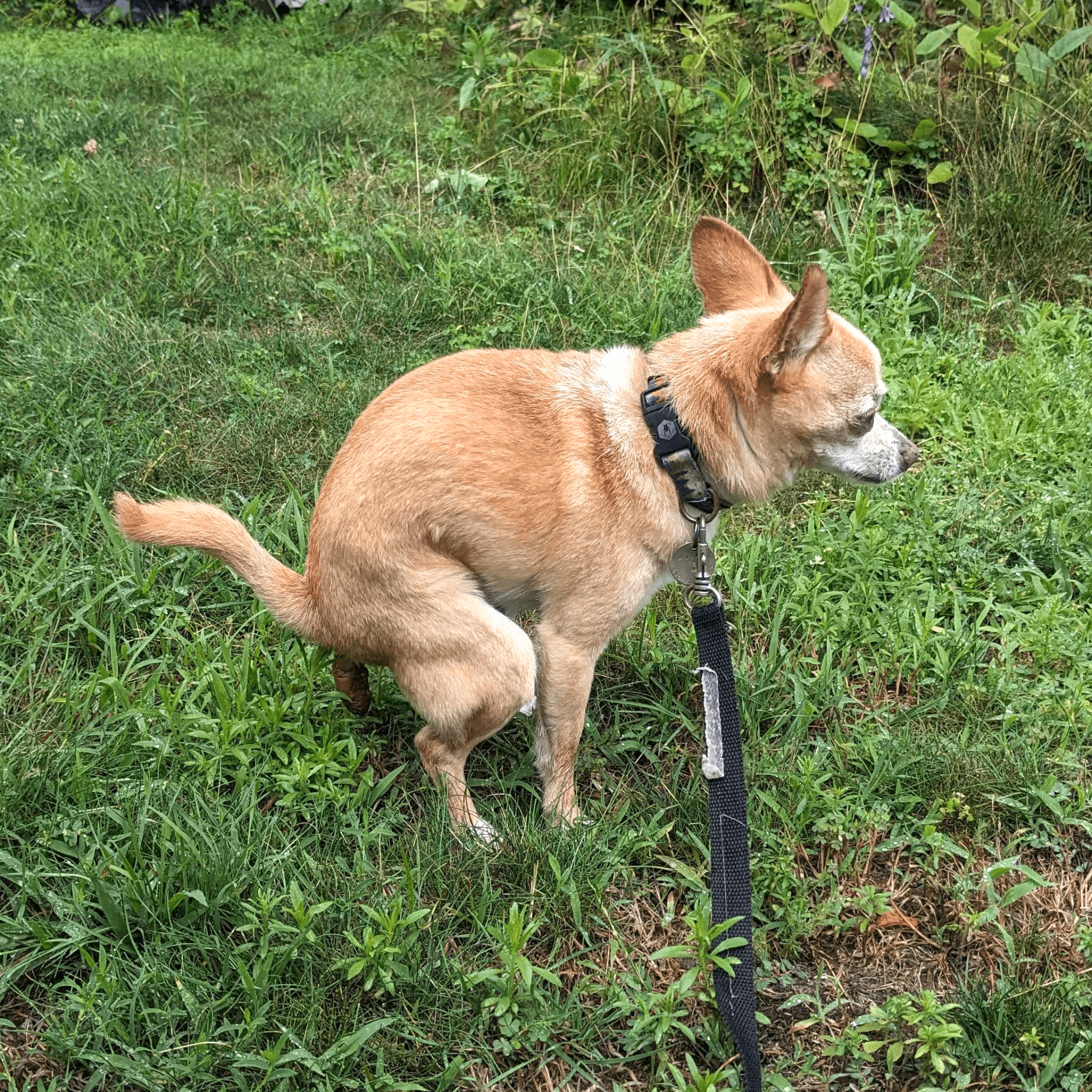
Photo caption: My dog Mickey is a very good boy.
A microbiome researcher’s adventures in stool collection
By Heidi A. Arjes, PhD
Despite having spent much of my career around microbiome researchers, I hadn’t thought deeply about stool collection until joining Outpost Bio. We’re building a platform that combines high-throughput experiments with machine learning to understand how different human microbiomes respond to drugs and other interventions. To create these microbiomes, we need stool samples—and preferably a collection process that doesn’t scare away our donors.
I participated in a stool microbiome study as a postdoc in KC Huang’s lab. The trainees involved showed up early one morning, drank their coffee, and did some science business. I’m not a coffee drinker, but I still managed to participate.
We used so-called “poop hats”: devices that sit underneath the toilet seat and hold a Cool Whip-sized tub. The collection itself was easy. The yucky part was gloving up and scooping a pea-sized portion into a tube and capping it while trying to remain as sterile as possible. After reserving our pea-sized portion, we bagged the remainder inside the poop hat and put them in the biohazard bin.
💡Pro tip: Schedule this type of experiment for the day the biohazard waste is collected, *not* several days before the waste is picked up.
I had filed that experience away as simply how stool collection works. And researchers often use this approach, especially when the amount of material matters—for example, when screened healthy donors provide stool for fecal microbiota transplantation preparations.
However, while looking into stool collection protocols, I learned about a simpler method: collecting directly into a specimen cup. The donor holds the cup in place (with a gloved hand), collects the sample by pooping directly into the cup, tightly screws on the lid, continues with their bathroom routine, and then returns the cup to the researcher.
I was intrigued. On every dog walk that week, I watched my dog poop and thought: If it works roughly the same way for humans, collecting some of it in a cup really shouldn’t be that difficult. I recruited an enthusiastic coworker who tested this method at home and had no problem. I tested it too and was surprised by how easy it was! It’s now our standard collection method. Meanwhile, I have an annoyingly large box of poop hats in reserve.
I haven’t exhaustively researched every stool-collection method, and I’m sure there are others that work well. I found some commercial flushable at-home collection devices and considered testing those as an alternative. But in startup life, once you find something that works and makes the process more efficient, you move quickly to the next problem, so I have no data on those. However, to make this post as informative as possible, if you know of other stool-collection protocols we should consider or feature here, feel free to reach out, and I’ll update this post with your tips/suggestions!
Picture caption: Two stool collection options described in this article. A sample cup that you can deposit your sample directly into (left) as compared to a “Poop hat” that would sit on the toilet bowl under the seat and collect a larger sample (right).
Photo caption: My dog Mickey is a very good boy.
Related articles


Legal Pages
©OUTPOST BIO 2026
BAKED BY THE SOURDOUGH
©OUTPOST BIO 2026
BAKED BY THE SOURDOUGH