Perspectives
From Shelf to Plate: Checking CFU Claims in Probiotic Products
From Shelf to Plate: Checking CFU Claims in Probiotic Products

By: Diego Aguirre
Gut health products are everywhere right now. Walk through a grocery store or pharmacy, and you’ll see drinks advertising live cultures, capsules promising billions of bacteria, and powders, gummies, sodas, or snacks using words like probiotic, prebiotic, microbiome-supporting, or gut-friendly.
Those words sound similar, but they do not all mean the same thing. Probiotics are live microorganisms intended to provide a health benefit when consumed in adequate amounts [1]. Prebiotics are compounds, often fibers, that feed beneficial microbes already present in the gut [2].
That definition raises a simple but important question: when a probiotic product says it contains live bacteria, how much of that bacteria can actually be recovered in the lab? In this experiment, we used cultivation methods to compare product claims with recoverable live bacteria from several consumer probiotic products.
What are Colony Forming Units?
Most probiotic labels report live bacteria as CFU, or colony-forming units. A CFU is a live, growable unit that can form a visible colony under specific laboratory conditions.
One important detail: 1 CFU does not necessarily mean 1 bacterial cell. For example, if a small clump of 50 bacterial cells sticks together and grows into one visible colony on a plate, it may be counted as 1 CFU. That is why CFU is better understood as a measure of live, growable units rather than an exact cell count.
If bacteria are stressed, clumped together, lacking the right nutrients, or unable to grow on the selected medium, CFU may not capture every cell present. Still, CFU remains one of the classic microbiology-based ways to measure live bacterial recovery [3].

Not all probiotics are the same
Probiotics are often talked about as one category, but they are not interchangeable. Different products can contain very different organisms, and those organisms do not all behave the same way during storage, digestion, or lab recovery.
Some shelf-stable probiotic products contain Bacillus species, such as Bacillus subtilis or Bacillus coagulans. These bacteria can form spores, which are dormant survival structures that help them tolerate heat, oxygen, drying, acid, and storage - all of which make Bacillus strains useful for capsules, powders, and drinks [4].
Many familiar probiotics contain Lactobacillus-related bacteria, including Lactobacillus acidophilus, Lacticaseibacillus rhamnosus, and Lactiplantibacillus plantarum. These organisms are common in digestive health products and fermented foods [5]. Some strains have been studied for digestive comfort, antibiotic-associated diarrhea, stool regularity, immune signaling, vaginal health, oral health, or interactions with pathogens [5]. The keyword is “some”: these effects are strain-specific and should not be generalized across the entire group.
For this experiment, the tested products focused on Bacillus and Lactobacillus-related organisms. These organisms differ in oxygen tolerance, growth requirements, and recovery conditions; the same CFU number may not mean the same biological behavior across products.
From organism identity to organism count
Once we know what organism we are trying to recover, the next question is how much viable material is present. In simple terms: how many live, growable bacteria can we count?
For each product, we suspended the sample in sterile diluent, serially diluted it, plated it onto an organism-appropriate growth medium, incubated it, and counted the colonies. Agar is a jelly-like material that solidifies the growth medium, allowing bacteria to grow into visible colonies on the plate. The growth medium was selected based on the organism or product being tested, since different probiotic organisms have different nutritional and oxygen requirements.
Capsule and powder products were grown on MRS agar under anaerobic conditions at 37°C [6]. Drink products were grown on LB agar at 37°C. Plates were inspected after 48 hours of incubation, and colonies were counted from dilution spots that produced countable growth. For products tested in replicates, replicate values were used to estimate the recovered CFU range or mean recovery.
Each visible colony is treated as a colony-forming unit. Using the dilution factor and plated volume, colony counts can be converted into CFU per mL, CFU per capsule, or CFU per container.
Why test consumer probiotic products?
This project examined consumer probiotic products across formats people commonly encounter, including supplements, capsules, drinks, and powders.
These products often make CFU or live-culture claims, but the clarity of those claims varies. Some products list CFU per capsule. Others list CFU per serving. Some drinks state that they contain live cultures without listing a count. Even when CFU is listed clearly, the reported value may refer to manufacture, packaging, or a guaranteed amount through shelf life rather than the value recovered from a purchased product. A first-pass CFU experiment asks a focused question: when a product is plated under defined laboratory conditions, are living, growable bacteria recovered at levels consistent with the label?
Testing consumer probiotic products

To convert label claims into measurable results, we tested a small set of consumer probiotic products across different formats: drinks, capsules, and powders. The products included Jarrow Formulas Ideal Bowel Support, GoodBelly, Culturelle Digestive Daily Probiotic, Yakult Probiotic Drink, Wild Wonder, Culture Pop, Align, Enzymedica Colostrum + Probiotics, and Trader Joe’s Ginger Lemon Probiotic Drink.
The goal was not to determine clinical efficacy or overall product quality. Instead, we wanted to ask a simpler question: under our tested laboratory conditions, how many live, growable bacteria could we recover?
The drink products produced countable bacterial colonies, although their labels did not disclose a specific CFU value. Because of this, Wild Wonder and GoodBelly were compared with each other rather than against a stated CFU claim. Wild Wonder recovered about 1.05 billion CFU per container on average, with an observed range of about 923 million to 1.18 billion. GoodBelly recovered about 35.2 billion CFU per container on average, with an observed range of about 31.1 to 39.3 billion. Culture Pop recovered an average of 649 million CFU per container, whereas Yakult yielded an average of 6.7 billion CFU per container. Lastly, Trader Joe’s produced 0 CFU at every dilution, meaning no bacteria were recovered from their probiotic drink at all.
The capsule- and powder-based products were compared with their stated 10 billion CFU claims. Jarrow recovered about 35.8 billion CFU per capsule on average, while Culturelle recovered about 29.2 billion CFU per capsule on average. Both were above their stated 10 billion CFU claims under the tested conditions. Enzymedica recovered about 48.8 million CFU per tested serving on average, which was lower than its stated 10 billion CFU claim under the tested conditions.
The results are summarized below.
Probiotic CFU Recovery by Product
Product | Format | Organism | Growth conditions used | Reported CFU/Serving | Recovered CFU per serving (mean) |
Culturelle Digestive Daily Probiotic | Capsule | Lacticaseibacillus rhamnosus GG | MRS agar, 37°C, anaerobic | 10 billion | 29.2 billion |
Jarrow Formulas Ideal Bowel Support | Capsule | Lactiplantibacillus plantarum 299v | MRS agar, 37°C, anaerobic | 10 billion | 35.8 billion |
GoodBelly Digestion and Immunity | Drink | Bacillus subtilis DE111 | LB agar, 37°C | Not Listed | 35.2 billion |
Wild Wonder Prebiotic and Probiotic Sparkling | Drink | Bacillus subtilis | LB agar, 37°C | Not Listed | 1.05 billion |
Enzymedica Colostrum + Probiotics | Powder | Lactobacillus acidophilus-type organism | MRS agar, 37°C, anaerobic | 10 billion | 48.8 million |
Culture Pop probiotic soda | Drink | Bacillus Subtilis | LB agar, 37°C | Not Listed | 649 million |
Yakult | Drink | Lacticaseibacillus casei | MRS agar, 37°C, anaerobic | Not Listed | 6.7 billion |
Trader Joe’s probiotic sparkling beverage | Drink | Bacillus coagulans | LB agar, 37°C | Not Listed | 0 |
Together, these results show that CFU testing can convert a label claim into a measurable biological readout. Recoverable live bacteria were detected across multiple consumer probiotic products, and those recoveries could be compared with reported label claims where available. These results should be interpreted as an early experimental readout rather than a final assessment of product quality or efficacy.
Results visualization
The following figures summarize recovered CFU across the tested products and compare recovered values with reported label claims where available. Since recovered CFU values span several orders of magnitude, several plots use a log scale to support comparison across products.

Figure 1. Colony growth after 24 versus 48 hours. The product was serially diluted 10-fold and spotted onto an agar plate.
The same plate is shown after 24 hours of growth on the left and 48 hours on the right. JA refers to Jarrow Formulas Ideal Bowel Support, which contains Lactiplantibacillus plantarum 299v. EM refers to Enzymedica Colostrum + Probiotics, which was tested as a Lactobacillus acidophilus-type product. JA showed visible, countable colonies earlier as expected[7], while EM showed clearer colony recovery after additional incubation, and this slower growth is consistent with the literature[8]. These results show that different probiotic bacteria can grow at different rates, which can affect how CFU results are interpreted.
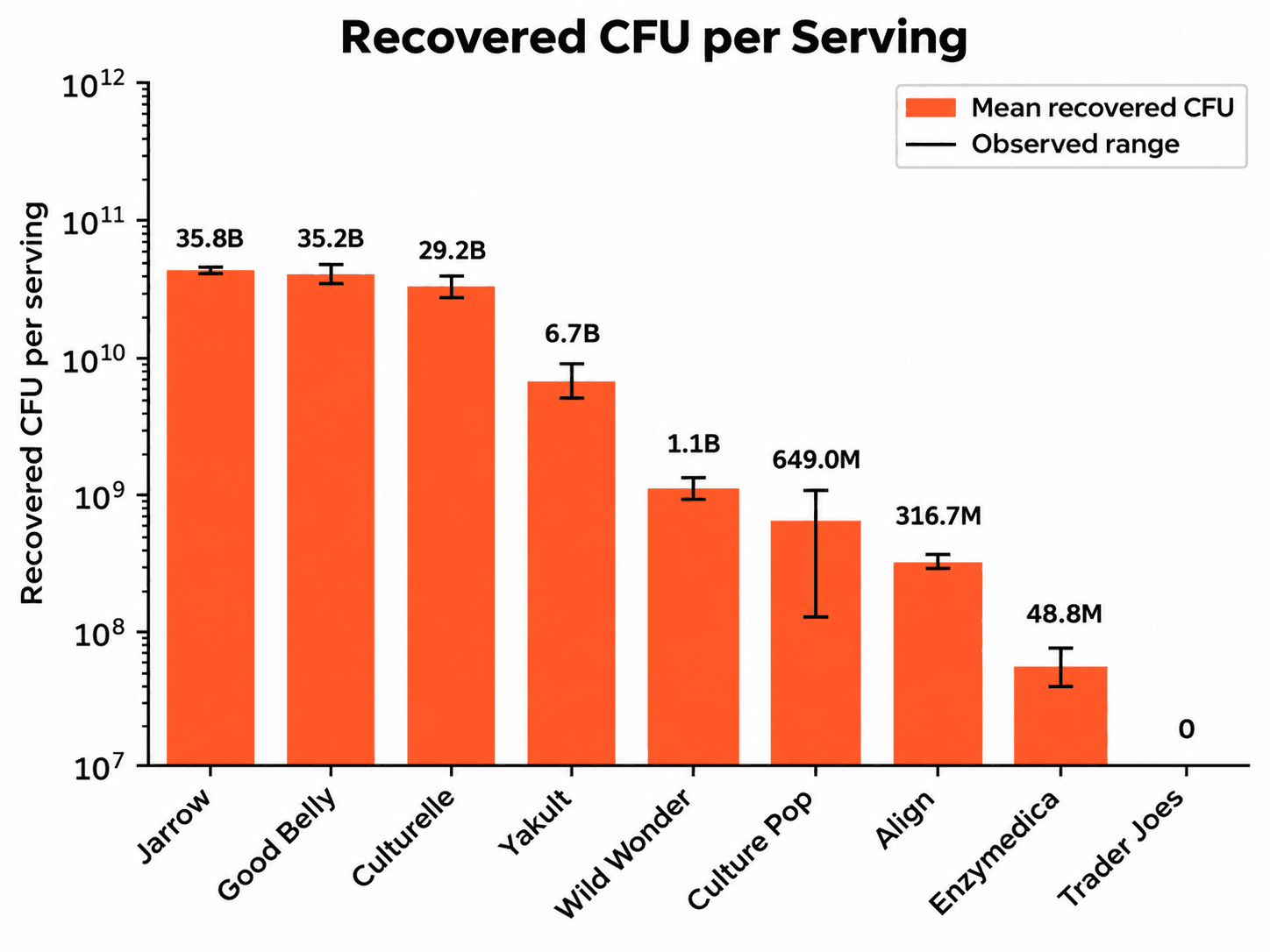
Figure 2. Recovered CFU across tested probiotic products
This figure compares recovered CFU across all tested consumer probiotic products. Bars show mean recovered CFU and error bars show the observed range. Recovery varied across products and formats.

Figure 3. Recovered CFU for products with stated 10 billion CFU claims
Bars show mean recovered CFU, points show individual replicate measurements, and error bars show the observed range. The dotted line marks the stated 10 billion CFU label claim. Jarrow and Culturelle recovered above their stated claims, while Enzymedica recovered below its stated claim under the tested conditions.
What we learned from the experiment
This experiment showed that consumer probiotic products can produce very different recovered CFU values, even when their labels use similar language. Some products recovered near or above their reported CFU claims, while others recovered below the expected range.
These results should not be interpreted as direct measures of product quality or efficacy. CFU recovery reflects the interaction among the product, the organism, and the conditions used for growth and recovery. Differences in recovery may reflect formulation, organism physiology, storage history, label-reporting conventions, or how well a given organism grows under the selected conditions.
For future experiments, the workflow can be expanded by testing additional culture conditions and product lots. This would help determine whether differences in recovered CFU are consistent across conditions and whether they reflect product-level differences, organism-specific recovery, or storage-related effects.
If you use a probiotic product that you’d like us to test for bacterial viability, drop us a line!
References
[1] Hill C, Guarner F, Reid G, Gibson GR, Merenstein DJ, Pot B, Morelli L, Canani RB, Flint HJ, Salminen S, Calder PC, Sanders ME. The International Scientific Association for Probiotics and Prebiotics consensus statement on the scope and appropriate use of the term probiotic. Nature Reviews Gastroenterology & Hepatology. 2014;11:506-514. doi:10.1038/nrgastro.2014.66
[2] Gibson GR, Hutkins R, Sanders ME, Prescott SL, Reimer RA, Salminen SJ, Scott K, Stanton C, Swanson KS, Cani PD, Verbeke K, Reid G. Expert consensus document: The International Scientific Association for Probiotics and Prebiotics consensus statement on the definition and scope of prebiotics. Nature Reviews Gastroenterology & Hepatology. 2017;14:491-502. doi:10.1038/nrgastro.2017.75
[3] Sutton S. Accuracy of plate counts. Journal of Validation Technology. 2011;17(3):42-46.
[4] Elshaghabee FMF, Rokana N, Gulhane RD, Sharma C, Panwar H. Bacillus as potential probiotics: status, concerns, and future perspectives. Frontiers in Microbiology. 2017;8:1490. doi:10.3389/fmicb.2017.01490
[5] de Man JC, Rogosa M, Sharpe ME. A medium for the cultivation of lactobacilli. Journal of Applied Bacteriology. 1960;23(1):130-135. doi:10.1111/j.1365-2672.1960.tb00188.x
[6] Sanders ME, Merenstein DJ, Reid G, Gibson GR, Rastall RA. Probiotics and prebiotics in intestinal health and disease: from biology to the clinic. Nature Reviews Gastroenterology & Hepatology. 2019;16:605-616. doi:10.1038/s41575-019-0173-3
[7] Smetanková, Jana & Hladíková, Zuzana & Valach, František & Zimanová, Michaela & Kohajdová, Zlatica & Greif, Gabriel & Greifová, Mária. (2012). Influence of aerobic and anaerobic conditions on the growth and metabolism of selected strains of Lactobacillus plantarum. Acta Chimica Slovaca. 5. 204-210. 10.2478/v10188-012-0031-1.
[8] Rooj, Arun & Kimura, Yasuhiro & Buddington, Randal. (2010). Metabolites produced by probiotic Lactobacilli rapidly increase glucose uptake by Caco-2 cells. BMC Microbiology. 10. 10.1186/1471-2180-10-16.
By: Diego Aguirre
Gut health products are everywhere right now. Walk through a grocery store or pharmacy, and you’ll see drinks advertising live cultures, capsules promising billions of bacteria, and powders, gummies, sodas, or snacks using words like probiotic, prebiotic, microbiome-supporting, or gut-friendly.
Those words sound similar, but they do not all mean the same thing. Probiotics are live microorganisms intended to provide a health benefit when consumed in adequate amounts [1]. Prebiotics are compounds, often fibers, that feed beneficial microbes already present in the gut [2].
That definition raises a simple but important question: when a probiotic product says it contains live bacteria, how much of that bacteria can actually be recovered in the lab? In this experiment, we used cultivation methods to compare product claims with recoverable live bacteria from several consumer probiotic products.
What are Colony Forming Units?
Most probiotic labels report live bacteria as CFU, or colony-forming units. A CFU is a live, growable unit that can form a visible colony under specific laboratory conditions.
One important detail: 1 CFU does not necessarily mean 1 bacterial cell. For example, if a small clump of 50 bacterial cells sticks together and grows into one visible colony on a plate, it may be counted as 1 CFU. That is why CFU is better understood as a measure of live, growable units rather than an exact cell count.
If bacteria are stressed, clumped together, lacking the right nutrients, or unable to grow on the selected medium, CFU may not capture every cell present. Still, CFU remains one of the classic microbiology-based ways to measure live bacterial recovery [3].
Not all probiotics are the same
Probiotics are often talked about as one category, but they are not interchangeable. Different products can contain very different organisms, and those organisms do not all behave the same way during storage, digestion, or lab recovery.
Some shelf-stable probiotic products contain Bacillus species, such as Bacillus subtilis or Bacillus coagulans. These bacteria can form spores, which are dormant survival structures that help them tolerate heat, oxygen, drying, acid, and storage - all of which make Bacillus strains useful for capsules, powders, and drinks [4].
Many familiar probiotics contain Lactobacillus-related bacteria, including Lactobacillus acidophilus, Lacticaseibacillus rhamnosus, and Lactiplantibacillus plantarum. These organisms are common in digestive health products and fermented foods [5]. Some strains have been studied for digestive comfort, antibiotic-associated diarrhea, stool regularity, immune signaling, vaginal health, oral health, or interactions with pathogens [5]. The keyword is “some”: these effects are strain-specific and should not be generalized across the entire group.
For this experiment, the tested products focused on Bacillus and Lactobacillus-related organisms. These organisms differ in oxygen tolerance, growth requirements, and recovery conditions; the same CFU number may not mean the same biological behavior across products.
From organism identity to organism count
Once we know what organism we are trying to recover, the next question is how much viable material is present. In simple terms: how many live, growable bacteria can we count?
For each product, we suspended the sample in sterile diluent, serially diluted it, plated it onto an organism-appropriate growth medium, incubated it, and counted the colonies. Agar is a jelly-like material that solidifies the growth medium, allowing bacteria to grow into visible colonies on the plate. The growth medium was selected based on the organism or product being tested, since different probiotic organisms have different nutritional and oxygen requirements.
Capsule and powder products were grown on MRS agar under anaerobic conditions at 37°C [6]. Drink products were grown on LB agar at 37°C. Plates were inspected after 48 hours of incubation, and colonies were counted from dilution spots that produced countable growth. For products tested in replicates, replicate values were used to estimate the recovered CFU range or mean recovery.
Each visible colony is treated as a colony-forming unit. Using the dilution factor and plated volume, colony counts can be converted into CFU per mL, CFU per capsule, or CFU per container.
Why test consumer probiotic products?
This project examined consumer probiotic products across formats people commonly encounter, including supplements, capsules, drinks, and powders.
These products often make CFU or live-culture claims, but the clarity of those claims varies. Some products list CFU per capsule. Others list CFU per serving. Some drinks state that they contain live cultures without listing a count. Even when CFU is listed clearly, the reported value may refer to manufacture, packaging, or a guaranteed amount through shelf life rather than the value recovered from a purchased product. A first-pass CFU experiment asks a focused question: when a product is plated under defined laboratory conditions, are living, growable bacteria recovered at levels consistent with the label?
Testing consumer probiotic products
To convert label claims into measurable results, we tested a small set of consumer probiotic products across different formats: drinks, capsules, and powders. The products included Jarrow Formulas Ideal Bowel Support, GoodBelly, Culturelle Digestive Daily Probiotic, Yakult Probiotic Drink, Wild Wonder, Culture Pop, Align, Enzymedica Colostrum + Probiotics, and Trader Joe’s Ginger Lemon Probiotic Drink.
The goal was not to determine clinical efficacy or overall product quality. Instead, we wanted to ask a simpler question: under our tested laboratory conditions, how many live, growable bacteria could we recover?
The drink products produced countable bacterial colonies, although their labels did not disclose a specific CFU value. Because of this, Wild Wonder and GoodBelly were compared with each other rather than against a stated CFU claim. Wild Wonder recovered about 1.05 billion CFU per container on average, with an observed range of about 923 million to 1.18 billion. GoodBelly recovered about 35.2 billion CFU per container on average, with an observed range of about 31.1 to 39.3 billion. Culture Pop recovered an average of 649 million CFU per container, whereas Yakult yielded an average of 6.7 billion CFU per container. Lastly, Trader Joe’s produced 0 CFU at every dilution, meaning no bacteria were recovered from their probiotic drink at all.
The capsule- and powder-based products were compared with their stated 10 billion CFU claims. Jarrow recovered about 35.8 billion CFU per capsule on average, while Culturelle recovered about 29.2 billion CFU per capsule on average. Both were above their stated 10 billion CFU claims under the tested conditions. Enzymedica recovered about 48.8 million CFU per tested serving on average, which was lower than its stated 10 billion CFU claim under the tested conditions.
The results are summarized below.
Probiotic CFU Recovery by Product
Product | Format | Organism | Growth conditions used | Reported CFU/Serving | Recovered CFU per serving (mean) |
Culturelle Digestive Daily Probiotic | Capsule | Lacticaseibacillus rhamnosus GG | MRS agar, 37°C, anaerobic | 10 billion | 29.2 billion |
Jarrow Formulas Ideal Bowel Support | Capsule | Lactiplantibacillus plantarum 299v | MRS agar, 37°C, anaerobic | 10 billion | 35.8 billion |
GoodBelly Digestion and Immunity | Drink | Bacillus subtilis DE111 | LB agar, 37°C | Not Listed | 35.2 billion |
Wild Wonder Prebiotic and Probiotic Sparkling | Drink | Bacillus subtilis | LB agar, 37°C | Not Listed | 1.05 billion |
Enzymedica Colostrum + Probiotics | Powder | Lactobacillus acidophilus-type organism | MRS agar, 37°C, anaerobic | 10 billion | 48.8 million |
Culture Pop probiotic soda | Drink | Bacillus Subtilis | LB agar, 37°C | Not Listed | 649 million |
Yakult | Drink | Lacticaseibacillus casei | MRS agar, 37°C, anaerobic | Not Listed | 6.7 billion |
Trader Joe’s probiotic sparkling beverage | Drink | Bacillus coagulans | LB agar, 37°C | Not Listed | 0 |
Together, these results show that CFU testing can convert a label claim into a measurable biological readout. Recoverable live bacteria were detected across multiple consumer probiotic products, and those recoveries could be compared with reported label claims where available. These results should be interpreted as an early experimental readout rather than a final assessment of product quality or efficacy.
Results visualization
The following figures summarize recovered CFU across the tested products and compare recovered values with reported label claims where available. Since recovered CFU values span several orders of magnitude, several plots use a log scale to support comparison across products.
Figure 1. Colony growth after 24 versus 48 hours. The product was serially diluted 10-fold and spotted onto an agar plate.
The same plate is shown after 24 hours of growth on the left and 48 hours on the right. JA refers to Jarrow Formulas Ideal Bowel Support, which contains Lactiplantibacillus plantarum 299v. EM refers to Enzymedica Colostrum + Probiotics, which was tested as a Lactobacillus acidophilus-type product. JA showed visible, countable colonies earlier as expected[7], while EM showed clearer colony recovery after additional incubation, and this slower growth is consistent with the literature[8]. These results show that different probiotic bacteria can grow at different rates, which can affect how CFU results are interpreted.
Figure 2. Recovered CFU across tested probiotic products
This figure compares recovered CFU across all tested consumer probiotic products. Bars show mean recovered CFU and error bars show the observed range. Recovery varied across products and formats.
Figure 3. Recovered CFU for products with stated 10 billion CFU claims
Bars show mean recovered CFU, points show individual replicate measurements, and error bars show the observed range. The dotted line marks the stated 10 billion CFU label claim. Jarrow and Culturelle recovered above their stated claims, while Enzymedica recovered below its stated claim under the tested conditions.
What we learned from the experiment
This experiment showed that consumer probiotic products can produce very different recovered CFU values, even when their labels use similar language. Some products recovered near or above their reported CFU claims, while others recovered below the expected range.
These results should not be interpreted as direct measures of product quality or efficacy. CFU recovery reflects the interaction among the product, the organism, and the conditions used for growth and recovery. Differences in recovery may reflect formulation, organism physiology, storage history, label-reporting conventions, or how well a given organism grows under the selected conditions.
For future experiments, the workflow can be expanded by testing additional culture conditions and product lots. This would help determine whether differences in recovered CFU are consistent across conditions and whether they reflect product-level differences, organism-specific recovery, or storage-related effects.
If you use a probiotic product that you’d like us to test for bacterial viability, drop us a line!
References
[1] Hill C, Guarner F, Reid G, Gibson GR, Merenstein DJ, Pot B, Morelli L, Canani RB, Flint HJ, Salminen S, Calder PC, Sanders ME. The International Scientific Association for Probiotics and Prebiotics consensus statement on the scope and appropriate use of the term probiotic. Nature Reviews Gastroenterology & Hepatology. 2014;11:506-514. doi:10.1038/nrgastro.2014.66
[2] Gibson GR, Hutkins R, Sanders ME, Prescott SL, Reimer RA, Salminen SJ, Scott K, Stanton C, Swanson KS, Cani PD, Verbeke K, Reid G. Expert consensus document: The International Scientific Association for Probiotics and Prebiotics consensus statement on the definition and scope of prebiotics. Nature Reviews Gastroenterology & Hepatology. 2017;14:491-502. doi:10.1038/nrgastro.2017.75
[3] Sutton S. Accuracy of plate counts. Journal of Validation Technology. 2011;17(3):42-46.
[4] Elshaghabee FMF, Rokana N, Gulhane RD, Sharma C, Panwar H. Bacillus as potential probiotics: status, concerns, and future perspectives. Frontiers in Microbiology. 2017;8:1490. doi:10.3389/fmicb.2017.01490
[5] de Man JC, Rogosa M, Sharpe ME. A medium for the cultivation of lactobacilli. Journal of Applied Bacteriology. 1960;23(1):130-135. doi:10.1111/j.1365-2672.1960.tb00188.x
[6] Sanders ME, Merenstein DJ, Reid G, Gibson GR, Rastall RA. Probiotics and prebiotics in intestinal health and disease: from biology to the clinic. Nature Reviews Gastroenterology & Hepatology. 2019;16:605-616. doi:10.1038/s41575-019-0173-3
[7] Smetanková, Jana & Hladíková, Zuzana & Valach, František & Zimanová, Michaela & Kohajdová, Zlatica & Greif, Gabriel & Greifová, Mária. (2012). Influence of aerobic and anaerobic conditions on the growth and metabolism of selected strains of Lactobacillus plantarum. Acta Chimica Slovaca. 5. 204-210. 10.2478/v10188-012-0031-1.
[8] Rooj, Arun & Kimura, Yasuhiro & Buddington, Randal. (2010). Metabolites produced by probiotic Lactobacilli rapidly increase glucose uptake by Caco-2 cells. BMC Microbiology. 10. 10.1186/1471-2180-10-16.
Related articles


Legal Pages
©OUTPOST BIO 2026
BAKED BY THE SOURDOUGH
©OUTPOST BIO 2026
BAKED BY THE SOURDOUGH